PTRD-41
Overview
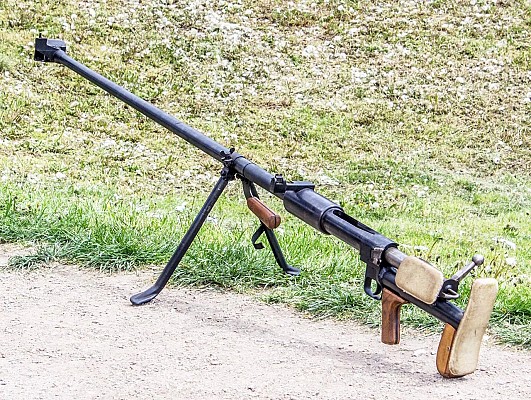
PTRD-41
Rear view of a PTRD-41 anti-materiel rifle.
Source: Unknown author -
© Copyright lies with original owner
V.A. Degtyarev
Soviet Union - No. 74 plant, Izhevsk (29.776 pcs)
Soviet Union - No. 622 plant, Izhevsk (11.875 pcs)
Soviet Union - No. 385 plant, Chrysostom (12.053 pcs)
Nazi Germany
China
North Korea
Description
Introduction
The PTRD-41 is a World War 2 era anti-materiel rifle of Soviet origin. The PTRD-41 was developed in competition with the PTRS-41. Both rifles were adopted and sometimes even produced in the same factory.
Design
The single shot PTRD-41 is a more basic design than the semi-automatic PTRS-41. The gun uses a bolt-action cock on close mechanism for loading. A short recoil operated mechanism automatically extracts the spend case to increase practical rate of fire. The crew of two consists of a gunner and a loader. Unlike modern anti-materiel rifles, the PTRD-41 is used only with iron sights.
Firepower
The 14.5x114mm is a powerful cartridge. Even so, it could not penetrate the front armor of most German tanks. It was quite effective against the side armor and the many lightly armored vehicles. Practical rate of fire is 8 to 10 rpm. Maximum range was 1 km. Engagements up to 400 meters proved more practical. Ammunition types used in the PTRD were the B-32 and BS-41 armor piercing rounds. Using the BS-41 projectile armor penetration is 40 mm at 100 meters.
Users
The PTRD-41 was produced in large numbers from late 1941 to early 1944. Nearly 300.000 of these guns were produced. These were prolific on the Eastern Front. Germany adopted the Schürzen applique armor panels on its tanks and assault guns to protect the thinner side armor from the abundance of Soviet 14.5mm anti-materiel rifles. The PTRD-41 was also used in several Cold War conflicts, such as the Korean war.
Details
Media
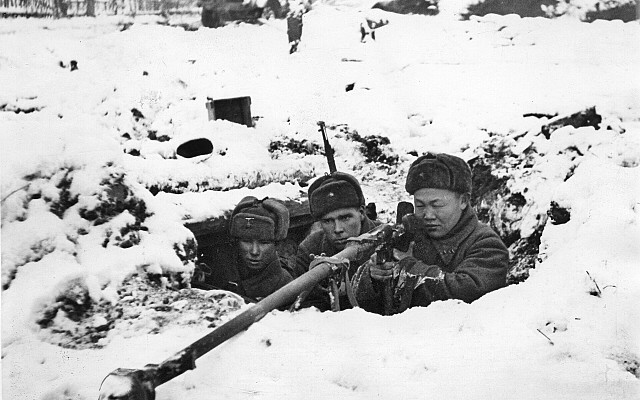
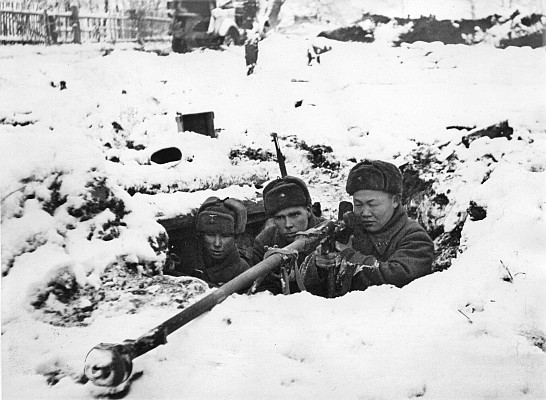
PTRD-41
Soviet soldiers with a PTRD-41 anti-materiel rifle during the Battle of Moscow in 1941.
Source: Zelenograd State Museum of History and Local Lore
Copyright: Public domain
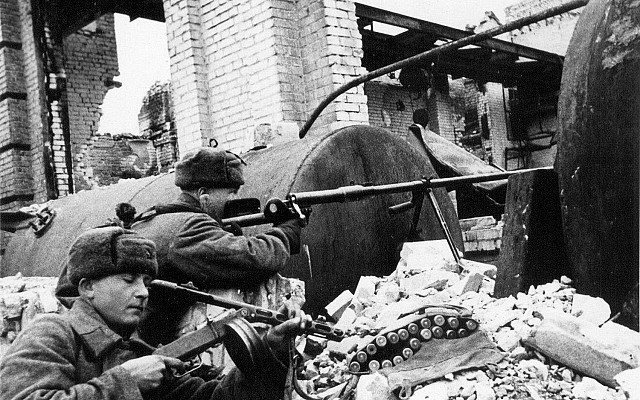
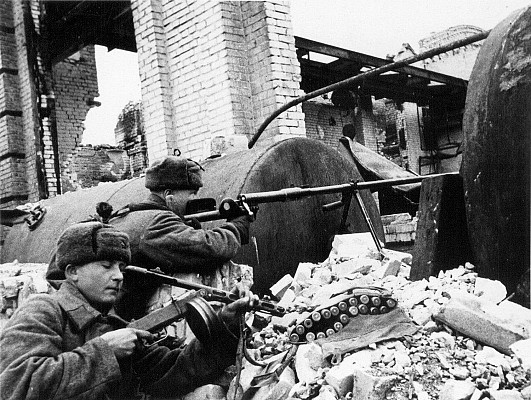
PTRD-41
Soviet soldiers in Stalingrad with a PTRD-41 anti-materiel rifle in November of 1942.
Source: TASS
Copyright: Public domain
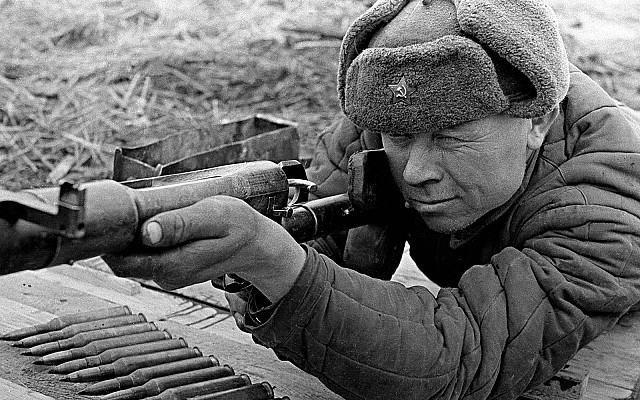
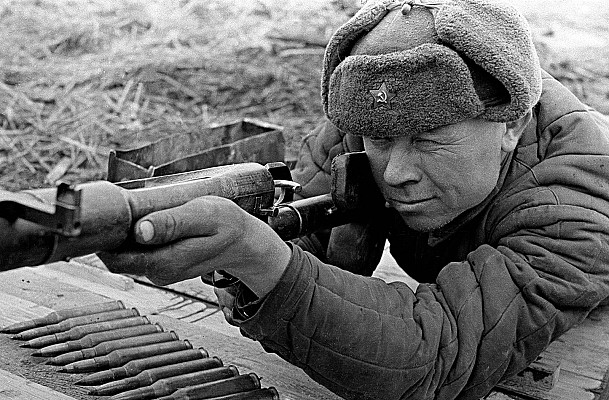
PTRD-41
Soviet soldier taking aim with a PTRD-41 in 1942.
Source: Government of Moscow
Copyright: Public domain
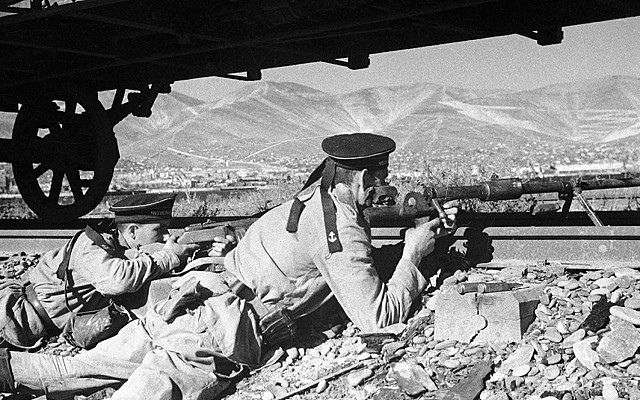
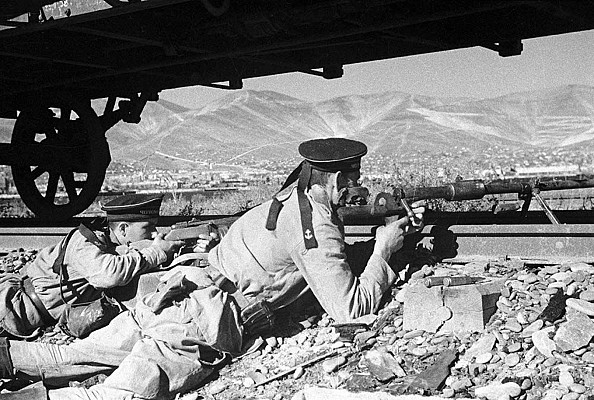
PTRD-41
Marines of the Black Sea Fleet seen with a PTRD-41 anti-materiel rifle during the battle to liberate Novorossiysk in September of 1943.
Source: RIA Novosti
Copyright: Public domain
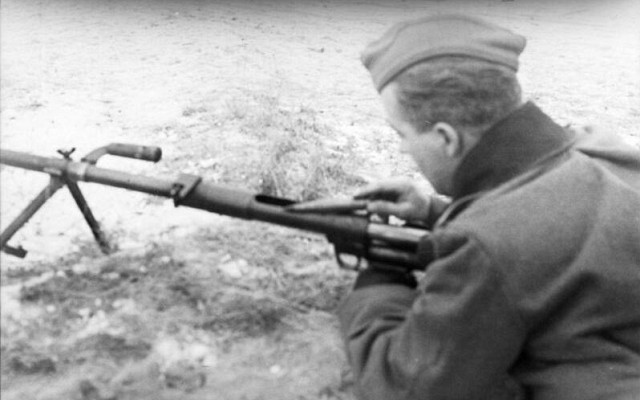
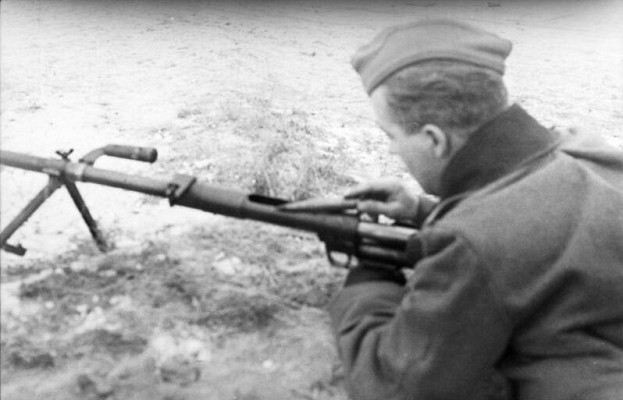
PTRD-41
German soldier loading a captured PTRD-41 in Russia in November of 1941.
Source: Bundesarchiv, Bild 101I-141-1273-24A
Copyright: CC BY-SA 3.0
Related articles
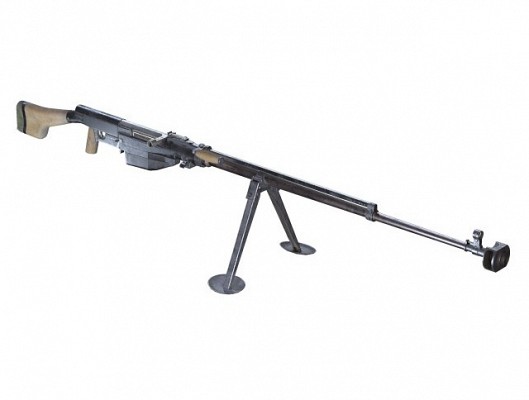
PTRS-41
The PTRD-41 was developed in competition with the semi-automatic PTRS-41. This was a heavier and more complex weapon with the benefit of increased rate of fire.
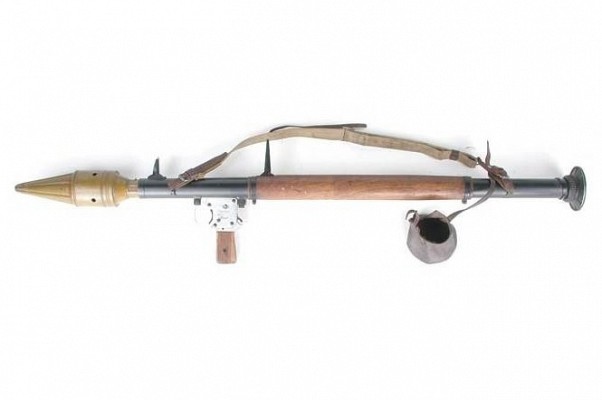
RPG-2
In Soviet service the PTRD-41 was officially replaced by the RPG-2 rocket launcher in the 1950's.